
China Rose Indicator: Color changes in acidic and basic medium
Can I Call You Rose? Testing pH with Nature's Prettiest Indicator
What are Indicators?
In the world of science, indicators play a critical role in determining the properties of substances, especially in acid-base reactions. An indicator is a substance that changes color when it comes into contact with an acid or a base. This color change helps scientists and students identify the pH level of a solution. There are various types of indicators, each useful in different scenarios, ranging from chemical to environmental testing.
China Rose: A Natural Indicator
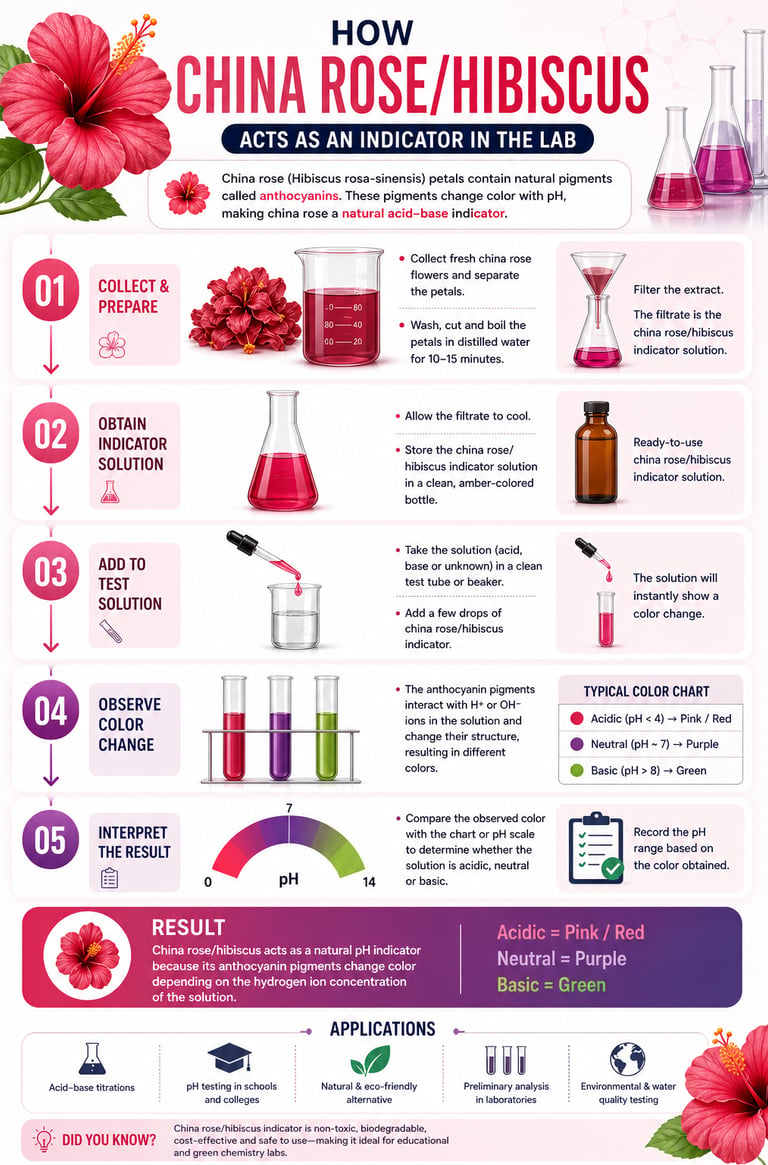
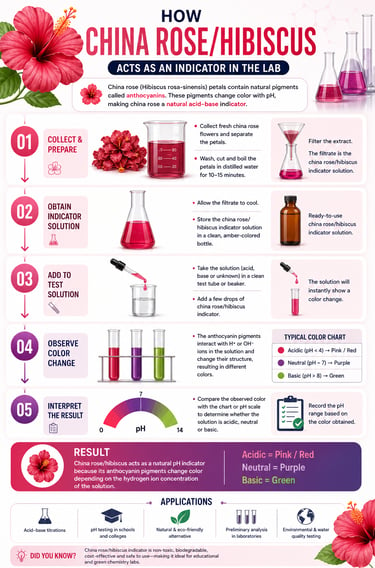
One fascinating natural indicator is the China rose, also known as hibiscus. The vibrant petals of hibiscus not only add beauty to gardens but also serve as an effective pH indicator in laboratory experiments. The pigment found in the petals changes color depending on the acidity or alkalinity of the solution it is mixed with. This property makes the China rose a popular choice for educational purposes in schools and colleges.
How is China Rose Prepared for Experiments?
To utilize China rose as an indicator, preparation is simple and user-friendly. First, gather fresh hibiscus petals and rinse them under cool water to remove any dirt. Then, place the petals in boiling water for about 10-15 minutes. The water will extract the anthocyanins, which are the pigments responsible for the color change. Once the solution has cooled, it can be filtered to remove the solid petals, leaving a vibrant purple liquid that is ready for use in experiments.
When the prepared solution is introduced to acidic substances, it turns a reddish hue, while alkaline solutions will lead to a greenish-yellow color. This striking transformation makes it an exceptional tool for visualizing pH levels during experiments.
Using the China rose indicator not only enhances the learning experience for students but also encourages curiosity about natural resources used in scientific experiments. This understanding of indicators, combined with hands-on experience, can deepen the appreciation for both chemistry and botany. So whether you're a student, a teacher or just a curious individual, experimenting with China rose can add an exciting twist to the study of acids and bases!
Contacts
Socials
Subscribe to our newsletter
support@otgscience.in
Copyright © 2025 otgscience.in
.