
Buddha's Teachings: Timeless Wisdom for Everyday Life


2500 Years Later: Why Buddha Still Matters
"At the end of the day, I'm at peace because my intentions are good and my heart is pure."
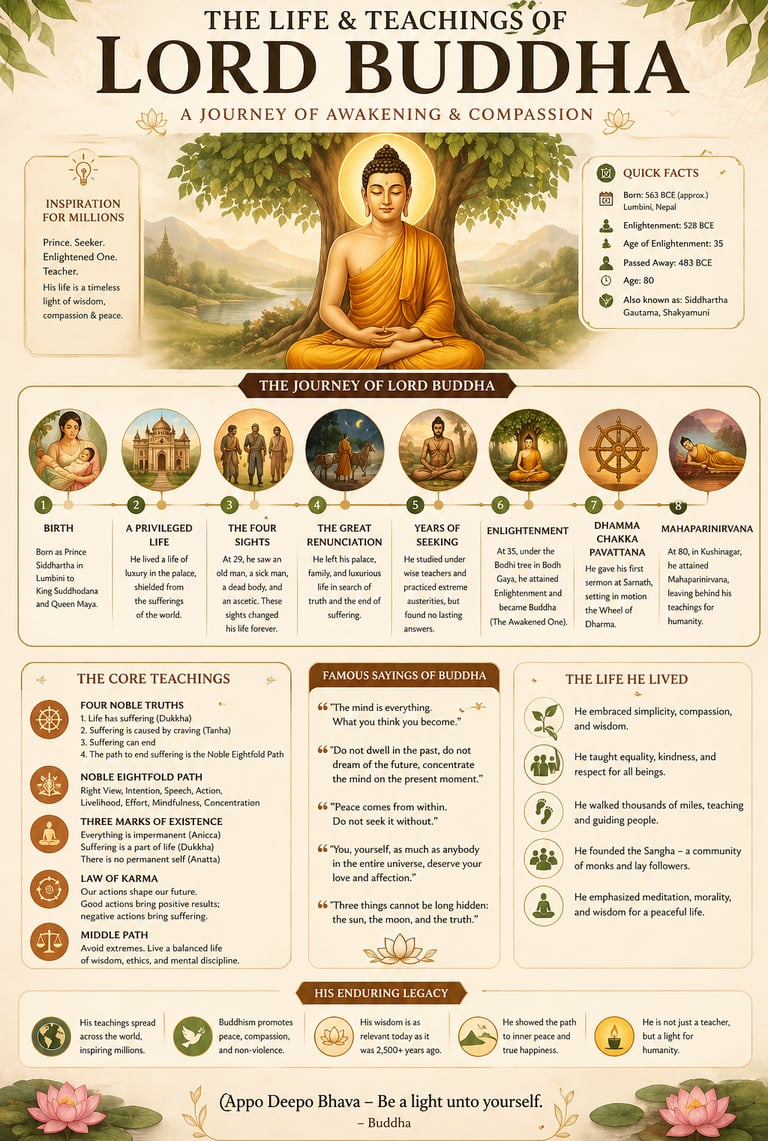
Buddha's teachings have transcended time and culture, continuing to hold profound relevance even 2,500 years after they were first articulated. At the core of his philosophy is the understanding of suffering and the pursuit of inner peace, concepts that resonate deeply in today’s fast-paced and often stressful society. Modern challenges such as anxiety, depression, and the pressures of everyday life underscore the significance of these teachings in addressing mental health issues.
The Four Noble Truths and the Eightfold Path serve as foundational principles guiding ethical living and personal development. These concepts, emphasizing mindfulness, right intention, and right action, provide a framework that individuals can utilize to navigate the complexities of contemporary life. For instance, the practice of mindfulness, a central tenet of Buddhism, has gained popularity in therapeutic settings, helping individuals cultivate awareness of their thoughts and feelings, thereby enabling them to respond to life's challenges with greater resilience.
Buddha's teachings extend into the realm of compassion, encouraging individuals to look beyond themselves and promote harmony within their communities. This notion of interconnectedness serves as a reminder of the importance of compassion in our actions and decisions, influencing social dynamics and interpersonal relationships. The emphasis on ethical living fosters an environment where individuals prioritize kindness and understanding, counterbalancing the rampant individualism sometimes observed today.
In essence, the universal values embedded in Buddha’s philosophy address fundamental human concerns that remain constant across cultures and eras. By integrating these teachings into daily life, individuals can find practical solutions to modern dilemmas, enhancing their well-being and fostering a cooperative society, making Buddha's wisdom truly timeless.
The Historical Context of Buddha's Life
Siddhartha Gautama, known to the world as the Buddha, was born around the 5th century BCE in Lumbini, present-day Nepal. He was born into a royal family of the Shakya clan, which afforded him a life of luxury and privilege. As a prince, his early years were characterized by opulence, shielding him from the harsh realities of life outside the palace walls. However, this cloistered existence led him to question the nature of suffering, death, and the ultimate purpose of existence.
Upon venturing outside the confines of his royal abode, Siddhartha encountered the discomforting realities of life: old age, disease, and death, phenomena that deeply troubled him. These experiences compelled him to renounce his princely titles and material wealth. At the age of 29, he embarked on the quest for enlightenment, leaving behind his family and the comforts of royal life. This significant transition marked the beginning of his spiritual journey, as he sought answers to the existential questions that haunted him.
During his years of asceticism, Siddhartha experimented with various schools of thought and practices prevalent at the time, engaging with both the Brahmanical traditions and the austere lifestyles of ascetic groups. However, he eventually concluded that extreme self-denial was not the path to enlightenment. Instead, he discovered the "Middle Way," a balanced approach between indulgence and rigorous asceticism. This pivotal realization led him to meditate under the Bodhi tree in Bodh Gaya, where he achieved enlightenment after 49 days of profound meditation.
The social, political, and spiritual landscape of ancient India profoundly influenced Buddha’s philosophical outlook. During this period, the Indian subcontinent faced significant turmoil, with competing ideologies that emphasized ritualism, asceticism, and cosmological speculation. Buddha's teachings emerged as a response to these varied influences, advocating for personal insight, compassion, and the pursuit of enlightenment through a harmonious lifestyle. Understanding Buddha’s historical context provides deeper insight into the poignant wisdom within his teachings, which continue to resonate with individuals seeking clarity and purpose in contemporary life.
Buddha as a Teacher: His Approach to Learning and Wisdom
Buddha, regarded as one of history's most profound teachers, adopted an innovative approach to disseminating his wisdom, distinctly differing from conventional educational practices of his time. Rather than relying solely on rigid structures or rote memorization, Buddha emphasized storytelling, dialogue, and experiential learning as essential components of his teachings. His use of parables and anecdotes helped to illustrate complex philosophical concepts, making them more accessible to his diverse audience.
Central to Buddha's teaching methodology is the belief that true understanding emerges from personal experience and critical reflection. He often engaged in dialogues with his followers, encouraging them to ask questions and explore their thoughts. This Socratic method not only nurtured a deeper comprehension of his teachings but also promoted a sense of ownership over their learning journey. Unlike traditional education systems, which frequently emphasize passive reception of information, Buddha's techniques fostered active participation and engagement, allowing his students to internalize the lessons rather than simply memorizing them.
Buddha's emphasis on experience as a pathway to wisdom highlighted the significance of critical thinking. He encouraged his disciples to analyze their emotions, thoughts, and perceptions, promoting a self-reflective practice that would lead to greater insights. This approach aimed to cultivate an understanding rooted in personal truth rather than blind acceptance of authoritative doctrines. By integrating reason and inquiry into his teachings, Buddha’s methods invited individuals to embark on their own path of discovery and self-realization.
In contrast to more traditional forms of education that may prioritize hierarchy and authority, Buddha's teachings promote an egalitarian approach to wisdom. This inclusive style not only enhances the learning process but also empowers individuals to become their own teachers, discovering the profound teachings of Buddha in everyday life.
Understanding the Core Teachings of Buddha: The Four Noble Truths and the Eightfold Path
The essence of Buddhism is encapsulated in the foundational principles known as the Four Noble Truths, which provide insight into the human experience of suffering and its cessation. The First Noble Truth, Dukkha, acknowledges that suffering is an inherent part of life. This understanding transcends mere acknowledgment and encourages individuals to confront the inevitability of discomfort and dissatisfaction that most human experiences entail. By recognizing the presence of suffering, one can begin to approach it with a mindset oriented towards resolution rather than avoidance.
The Second Noble Truth, Samudaya, posits that the origin of suffering arises from attachment, desire, and ignorance. These cravings drive individuals to seek transient pleasures, which often lead to deeper dissatisfaction. By identifying the root causes of suffering, practitioners are empowered to cultivate mindfulness and introspection, leading to a greater awareness of their desires and attachments. This insight paves the way for personal transformation.
The Third Noble Truth, Nirodha, asserts that the cessation of suffering is attainable. This idea is not merely theoretical; it offers hope and a practical pathway for individuals striving for peace and contentment. Understanding that liberation from suffering is possible encourages one to engage with their inner experience rather than remain passive.
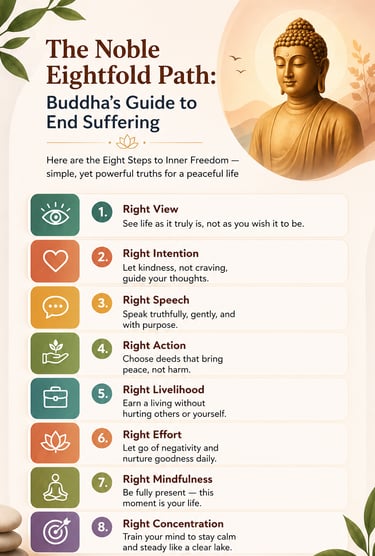
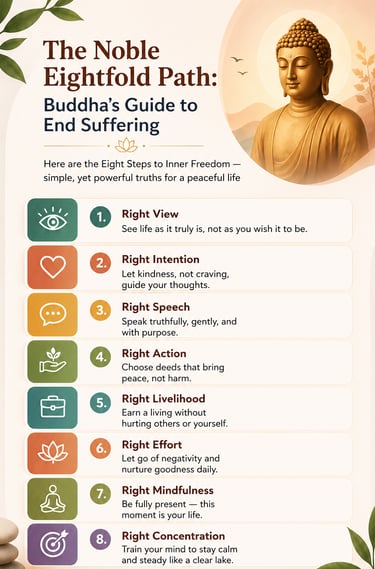
Finally, the Fourth Noble Truth outlines the Eightfold Path, a comprehensive guide to ethical living and mental development. This path consists of right understanding, right intention, right speech, right action, right livelihood, right effort, right mindfulness, and right concentration. Each component of the Eightfold Path is interconnected and collectively provides a roadmap for cultivating wisdom, ethical conduct, and mental discipline—all essential for achieving a balanced and meaningful existence. In conjunction, the Four Noble Truths and the Eightfold Path form the core teachings of Buddha, offering timeless wisdom that can enhance daily life and foster spiritual growth.
Contacts
Socials
Subscribe to our newsletter
support@otgscience.in
Copyright © 2025 otgscience.in
.